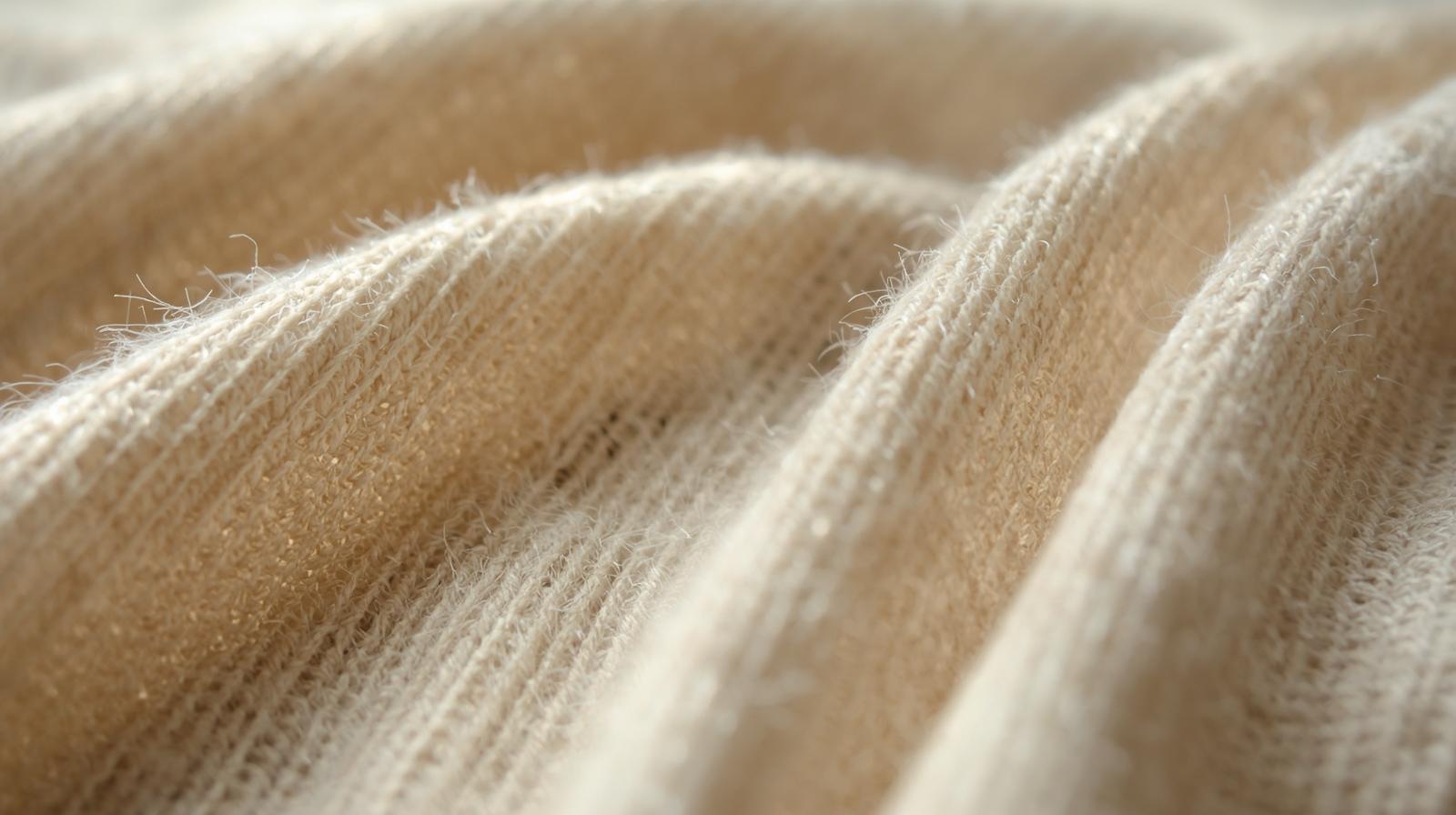
When Sustainability Targets Collide with Production Reality
Many brands commit to sustainability targets—recycled content, reduced carbon footprint, responsible sourcing. But once development moves into bulk production, another layer of pressure appears: consistency. Fabrics that look ideal in sampling stages can become unstable when scaled, leading to variation in weight, shrinkage or hand feel.
This is where recycled polyester knit fabric is evaluated not just for its environmental value, but for how reliably it performs across large production runs. Buyers are no longer asking “is it recycled,” but “can it deliver the same results, every time, at scale?”
At Succeed Textile, recycled fabric programs are built with both sustainability and production repeatability in mind.
How Recycled Polyester Knit Fabrics Behave in Practice
Recycled polyester is typically produced from post-consumer materials such as PET bottles. While the base polymer remains similar to virgin polyester, variations can occur depending on recycling processes, fiber quality and spinning control.
In knit structures, this translates into several performance considerations:
-
Yarn uniformity affects surface smoothness and appearance
-
Fiber strength impacts long-term durability
-
Dye absorption consistency influences color repeatability
-
Loop stability determines fabric recovery and deformation resistance
Industry data from Textile Exchange (Preferred Fiber & Materials Market Report) shows recycled polyester usage continues to grow globally, but also highlights the importance of process control in maintaining performance standards.
Recycled vs Virgin Polyester in Apparel Programs
| Performance Factor | Recycled Polyester Knit | Virgin Polyester Knit |
|---|---|---|
| Strength retention | 92–97% | 100% baseline |
| Color consistency | Slightly variable | Highly stable |
| Shrinkage control | 3–6% | 2–4% |
| Environmental impact | Reduced by ~30–50% | Standard footprint |
| Batch repeatability | Medium–High (controlled) | High |
The gap is no longer dramatic—but it still requires careful sourcing and testing. A well-developed recycled polyester knit fabric program can match most performance expectations when properly controlled.
Building Stability into Sustainable Fabric Programs
To ensure recycled fabrics perform reliably, manufacturers adjust several key parameters:
-
Yarn selection: controlling recycled content ratio and fiber quality
-
Knitting density: improving structure stability and reducing distortion
-
Finishing processes: stabilizing shrinkage and improving surface consistency
-
Quality control systems: monitoring batch-to-batch variation
At Succeed Textile, these adjustments are applied during development rather than after issues appear, allowing brands to scale sustainable collections without sacrificing production efficiency.
Where Recycled Polyester Knit Fabrics Work Best
In real apparel markets, recycled polyester fabrics are most effective in categories where durability and consistency matter alongside sustainability:
-
Activewear collections requiring repeated washing performance
-
Casualwear lines focused on daily wear and easy maintenance
-
Corporate or promotional apparel with sustainability positioning
-
Lightweight outerwear where structure and durability must align
According to OEKO-TEX® and Global Recycled Standard (GRS) guidelines, certified recycled materials must meet both environmental and safety benchmarks, reinforcing their suitability for large-scale garment production.
How Buyers Select the Right Fabric for Sustainable Programs
| Selection Factor | Recommended Range | Impact on Product |
|---|---|---|
| Fabric weight | 180–320 GSM | Determines garment structure |
| Recycled content ratio | 50–100% | Balances sustainability vs stability |
| Shrinkage tolerance | ≤5% | Affects sizing consistency |
| Color fastness | Grade 4–5 | Maintains appearance over time |
| Batch variation control | ≤5% deviation | Ensures repeat production |
Selecting the right recycled polyester knit fabric is not about maximizing recycled content alone—it is about maintaining performance while meeting sustainability targets.
Practical Questions from Apparel Buyers
Q: Does recycled polyester reduce garment durability?
A: With controlled processes, durability remains close to virgin polyester levels.
Q: Why do some recycled fabrics show inconsistency?
A: Variation often comes from uneven fiber quality or insufficient process control.
Q: Is 100% recycled content always recommended?
A: Not necessarily. Blended ratios can improve stability in certain applications.
Q: Can recycled fabrics support premium apparel lines?
A: Yes, especially when surface finishing and structure are optimized.
Sustainability That Works in Real Production Environments
Sustainability goals only create value when they work within real production constraints. A well-developed recycled polyester knit fabric program allows brands to meet environmental targets without compromising consistency, durability or efficiency.
At Succeed Textile, fabric development focuses on aligning sustainability with actual manufacturing conditions—ensuring that materials perform not only in concept, but across repeated production cycles.
You can explore our sustainable fabric options and production capabilities on the
👉 homepage
For recycled fabric sourcing, technical alignment or bulk production planning, connect with us via the
👉 contact page