The Thermal and Structural Benefits of Interlock Fabric for Outerwear Manufacturers
Balancing Warmth and Structure: The Outerwear Dilemma
Designing outerwear has always meant walking a fine line between comfort and form. The garment must be warm enough to withstand outdoor temperatures yet refined enough to maintain its shape through repeated wear. Traditional heavy wools deliver insulation but often limit flexibility. Lightweight synthetic knits stretch well but lose their structure over time. That is where interlock fabric offers a technical middle ground — dense enough to trap heat, stable enough to preserve silhouette, and flexible enough to tailor across different styles.
The Science Behind Thermal Retention
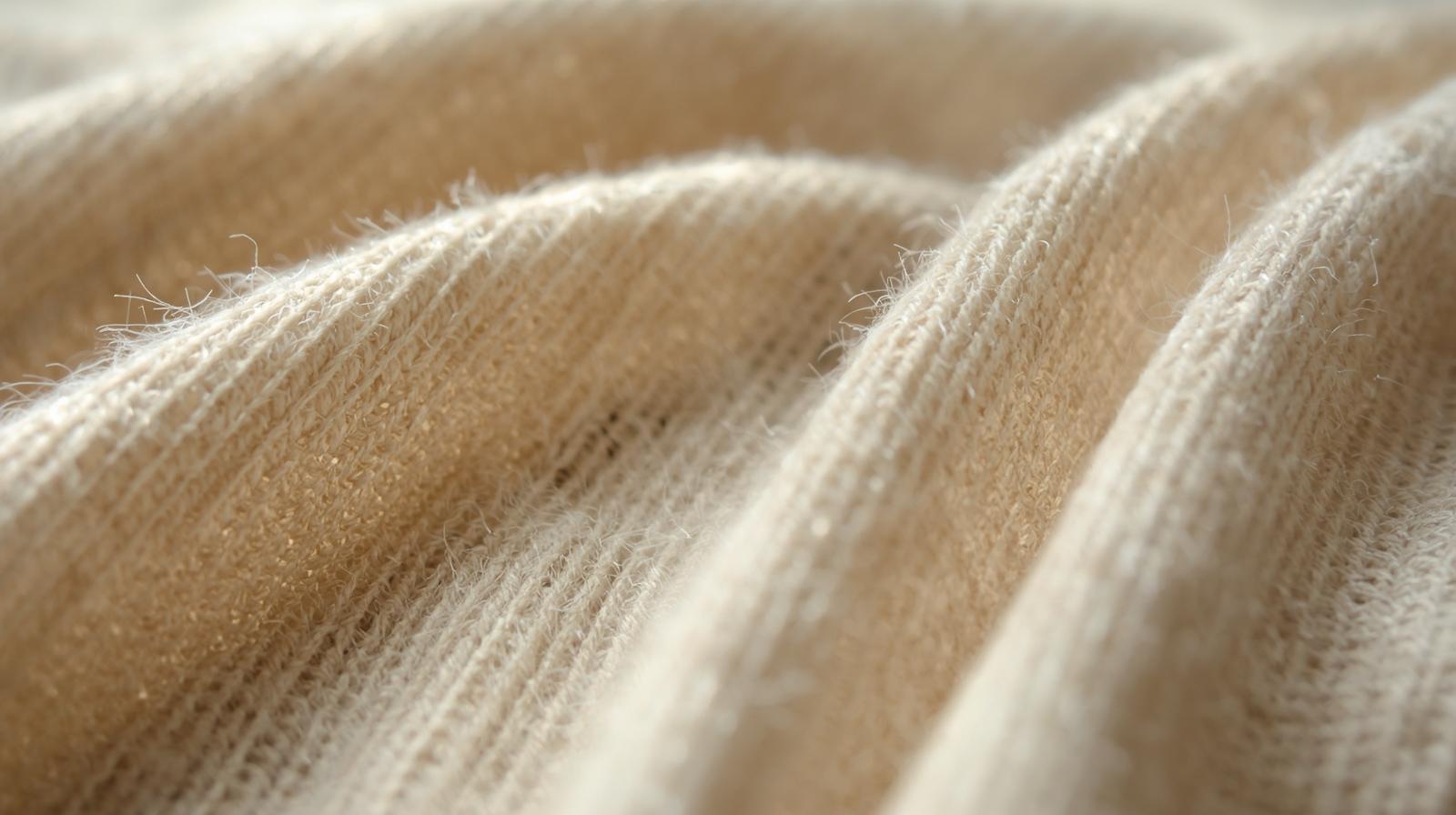
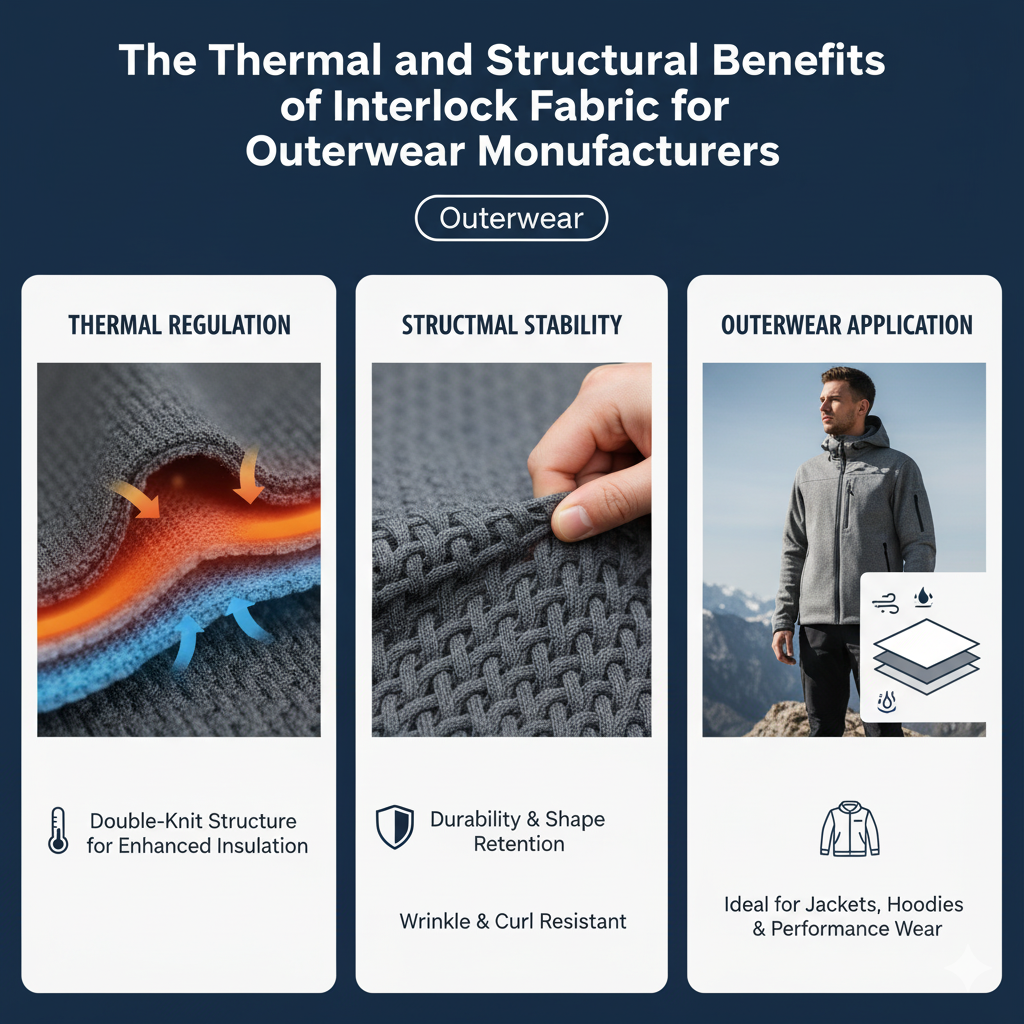
Interlock fabric belongs to the double-knit family. Unlike single jersey, its loops interlock from both sides, creating two layers that trap micro-pockets of air. These air layers act as natural thermal barriers, reducing heat transfer between body and environment.
The key thermal advantages include:
-
Low Heat Conduction: Dense loops slow down the loss of body warmth.
-
Air Cushion Effect: The interlocking structure retains a steady temperature without the bulk of fleece.
-
Breathable Warmth: The dual layers regulate airflow, keeping comfort steady in shifting climates.
This explains why outerwear using interlock maintains insulation while remaining surprisingly lightweight.
Structural Integrity: What Keeps Shape Over Time
Outerwear garments demand more than warmth — they must drape correctly after hundreds of wears. Interlock’s double-needle construction creates a balanced tension grid, preventing curling or distortion along seams.
Compared to standard single knits, interlock fabric shows:
| Property | Single Jersey | Interlock Fabric |
|---|---|---|
| Curling at Edges | Frequent | Rare |
| Dimensional Stability | Moderate | High |
| Surface Uniformity | Moderate | Smooth and Dense |
| Suitability for Tailored Shapes | Limited | Excellent |
The result is a fabric that cuts neatly, sews predictably, and maintains its intended shape long after production.
GSM Control: Precision Behind Performance
For outerwear, GSM (grams per square meter) determines warmth and drape. A small deviation in GSM can alter how a jacket feels or fits. Professional interlock fabric bulk suppliers control GSM through tension-calibrated machines and online monitoring.
Typical GSM ranges for outerwear include:
-
200–240 GSM: Lightweight transitional jackets.
-
260–300 GSM: All-season outerwear or fashion coats.
-
320–360 GSM: Heavy-duty winter garments or structured overcoats.
Stable GSM ensures consistent thermal behavior and predictable cutting yield — two factors critical for cost efficiency in mass production.
Practical Advantages for Outerwear Manufacturers
-
Thermal Efficiency Without Bulk: Ideal for modern slim silhouettes that still demand warmth.
-
Consistent Fit Across Batches: Dimensional stability minimizes variations in finished garments.
-
Design Flexibility: Can be brushed, bonded, or laminated for different aesthetic and tactile effects.
-
Ease of Handling: Flat surface simplifies cutting, printing, and bonding with other materials.
-
Reduced Waste: Minimal shrinkage and deformation lower rejection rates during sewing.
For design teams, interlock enables clean lines and reliable performance without overengineering or weight gain.
Real-World Applications
| Product Type | Functional Focus | Recommended Fabric Weight |
|---|---|---|
| Light Jackets / Cardigans | Transitional warmth | 200–240 GSM |
| Structured Coats | Form retention | 280–320 GSM |
| Sporty Outerwear | Flexibility and comfort | 240–280 GSM |
| Uniforms / Workwear | Durability and easy care | 260–300 GSM |
Many global outerwear brands use interlock fabrics to achieve a balance between comfort, function, and clean tailoring, especially in climates that demand year-round versatility.
How to Evaluate an Interlock Fabric Bulk Supplier
-
Check for GSM and Shrinkage Reports: Reliable suppliers provide lab data before shipping.
-
Inspect Fabric Edges: No curling means well-balanced loop tension.
-
Ask for Double-Face Samples: Quality interlock shows identical surfaces on both sides.
-
Confirm Finishing Options: Anti-pilling and compacting treatments improve wear resistance.
-
Review Certification: ISO and Oeko-Tex® compliance ensures consistent, safe production.
These checks help manufacturers avoid costly quality fluctuations in long production runs.
Frequently Asked Questions
Q1: Is interlock fabric suitable for both fashion and functional outerwear?
Yes. It offers the flexibility to serve luxury collections and performance-based workwear alike.
Q2: How does interlock compare to bonded fleece for warmth?
Bonded fleece provides more insulation but adds bulk; interlock achieves moderate warmth with greater shape control.
Q3: What finishes can enhance interlock fabric for outerwear?
Brushed interiors, lamination, or water-repellent coatings expand functionality without sacrificing breathability.
Q4: What’s the typical lead time for bulk interlock fabric orders?
Usually 25–30 days after sample approval, depending on finishing complexity and order volume.
Conclusion: A Balanced Fabric for the Modern Outerwear Market
Interlock fabric’s double-knit design solves the dual challenge of warmth and stability. Its natural insulation, fine drape, and predictable performance make it one of the most reliable materials for outerwear manufacturers looking to optimize both function and style.
For technical specifications, sourcing advice, or sample requests, visit the homepage or reach out via the contact page for expert guidance